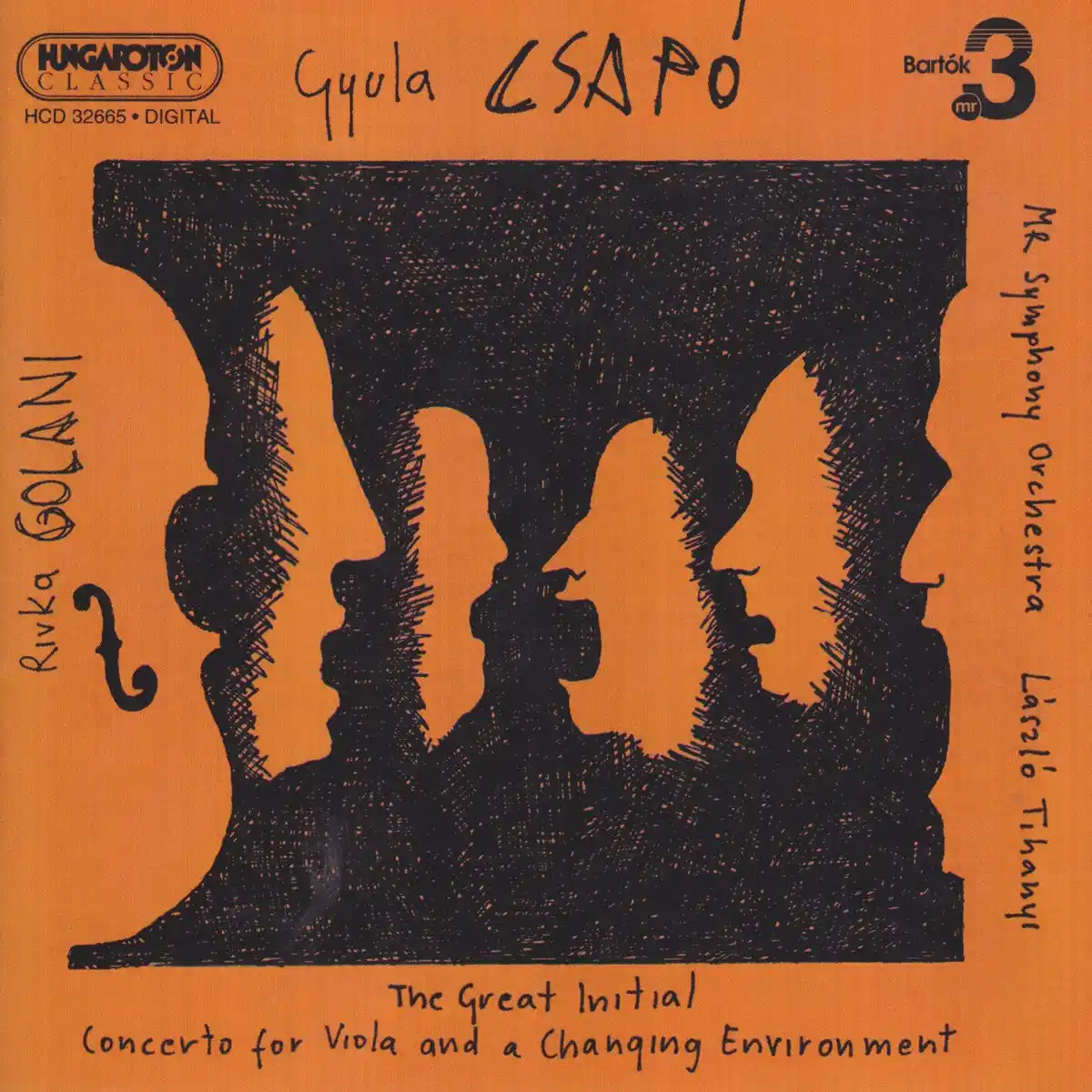
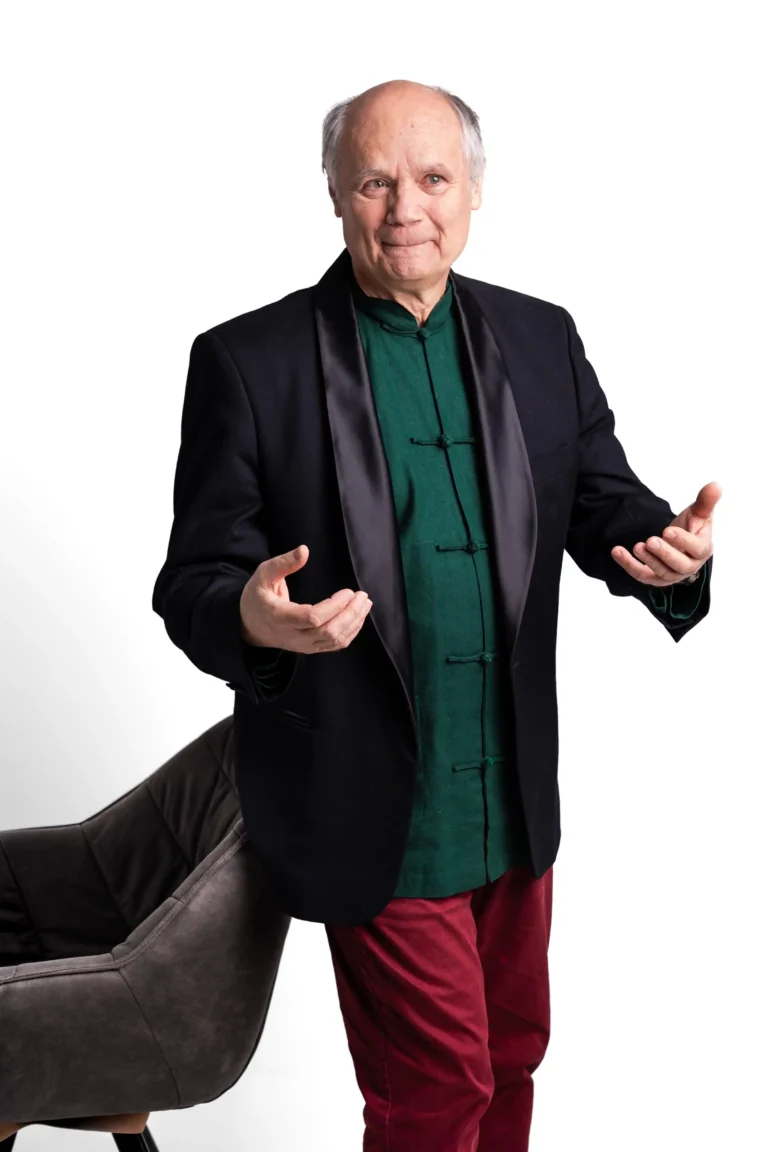
“His music, put in the context of the international contemporary music scene, is answering the most timely questions with works of exceptional quality […] His integrity and creative imagination – far beyond the fashionable and the trendy – represents […] one of the most important contributions in the field today. His academic background is very rich and diverse, and he has a broad international horizon.” These are the words of György Kurtág about Csapó, who spent four decades outside his home country. After his Composition degree from the Liszt Academy, Csapó studied at IRCAM, Paris, followed by doctoral studies with Morton Feldman at SUNY-Buffalo. He taught Composition at McGill and Princeton Universities, and is now Professor Emeritus of the University of Saskatchewan, Canada.
Adopting a global musical outlook, he fused his experiences into a compositional technique he calls “synthetism.” Linking perceived musical time and timbre led him to liberate musical time from its captivity within narrative structures, creating a mesmerizing effect in works that question assumptions of cause-and-effect and teleological relationships. His magnum opus is a monumental rendering of Racine’s “Phaedra” into a five-act opera (in four languages, as a tribute to the spirit of the European Union). Phaedra and numerous other works are available from Editio Musica Budapest – Universal Music Publishers.
Csapó’s music is performed worldwide. “He would very much enliven the musical life of whatever city in which he lives, and those to which he would go” is how John Cage captured Csapó’s contagious spirit.